
OKRs only work if you look at them
What an OKR is, where it went wrong for me, and how the goals now stay in view during the quarter.
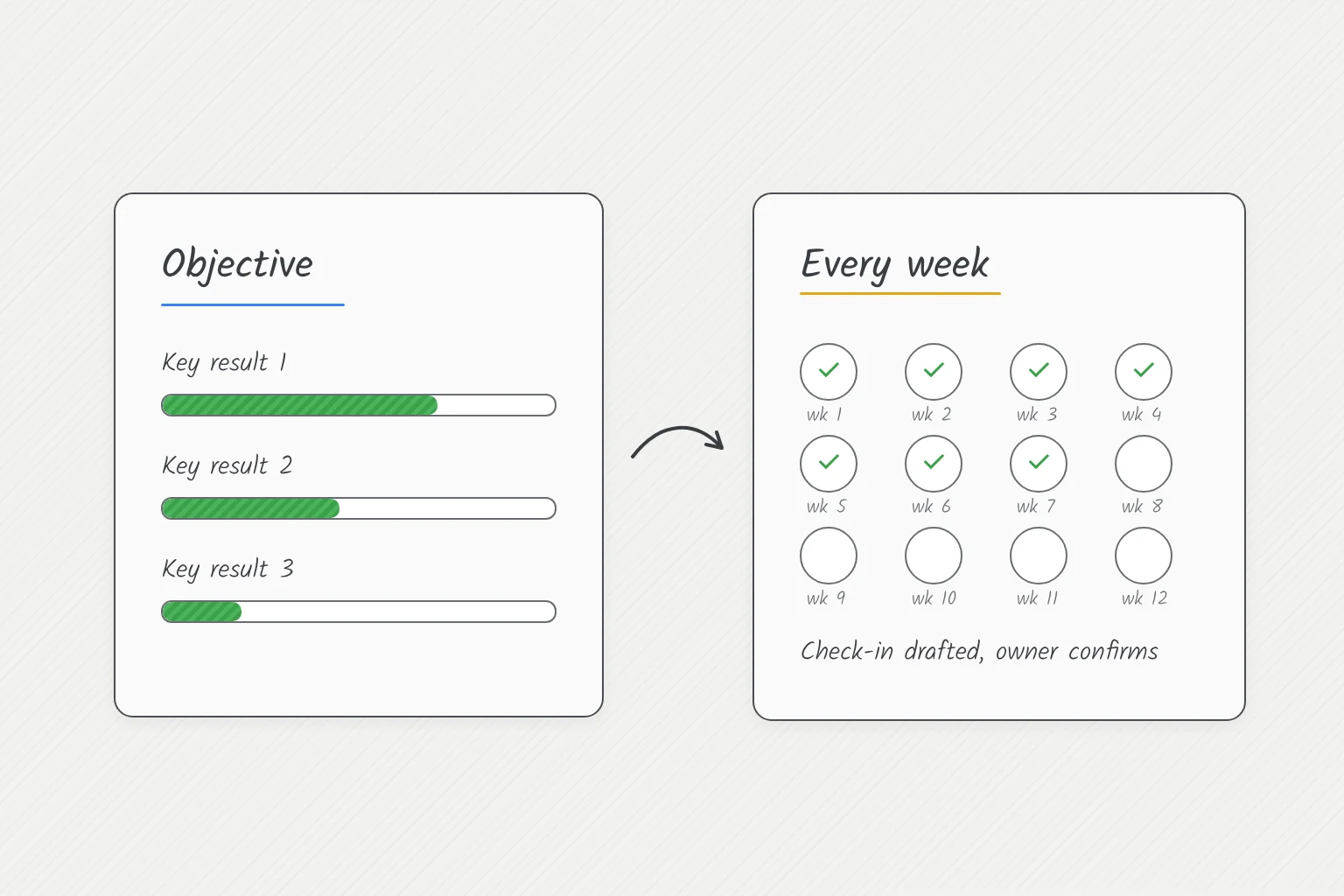
I have worked with OKRs for years, both at Bridge and at Ekipa. The method itself is simple, and it is old: Andy Grove used it at Intel, and John Doerr made it popular with his book Measure What Matters. What I struggled with was looking at the goals again once the quarter had started.
What an OKR is
An objective says in plain words what you want to change. One of ours at Ekipa for the first quarter of 2027 reads "Our people spend their time with clients, and agents prepare the contact".
Under each objective sit two to four key results. A key result is a number that tells you whether you got there, with the number in the title, so nobody has to open anything to see the target. Under that objective, one key result says that 4 partners and coaches act on at least half of their Monday list.
A quarter holds a few objectives, not ten, and each key result has one owner.
Where it went wrong for me
The main issue was alignment. We made OKRs at the start of the quarter and then forgot to check them once we were into the work. At the end of the quarter we checked again, only to realise we had forgotten a couple of important things.
Tracking progress was hard too. It was all manual, so it took a lot of discipline to keep looking at the numbers.
What I do differently now
All of that can be automated now, with clear reports and reminders to people. At Ekipa our goals live in the OKR app in Tooling Studio, next to the boards where the work happens, and Claude is connected to both.
- Each card says which key result it moves. The card "Build CRM upkeep agent" ends with "Moves: Agents KR4 (Q4)". When we pick our cards for the week, that line shows which goal the work is for.
- Some key results count themselves. "Agent account and safety basics live" is measured as the share of its linked cards that are done, so the number moves when a card is closed, without anyone updating it.
- No made-up starting numbers. Where we don't know today's number, the key result stays a draft and measuring it becomes the first piece of work.
- A check-in every week instead of every quarter. Claude drafts a check-in for each key result from the cards and the numbers, and the owner of each key result confirms it or corrects it.
I put this way of working into the roadmap step of our free founder pack, which turns your strategy into OKRs and actions. If you want to talk yours through first, book 20 minutes with me.
 Download our Plugin