
A Practical Guide to Collaboration in Project Management
Find proven strategies for collaboration in project management. This guide covers the tools, culture and techniques high-performing teams use.
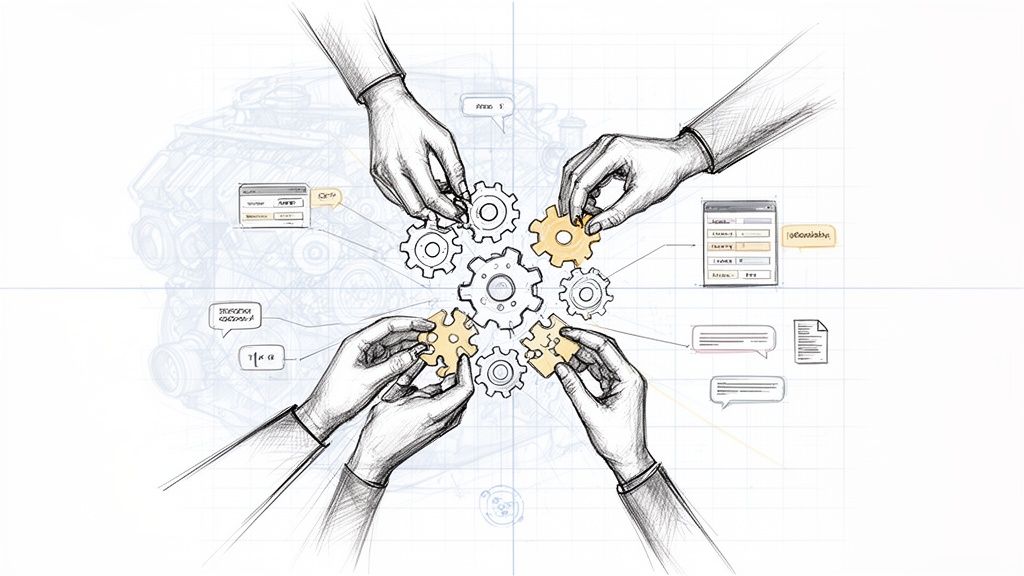
Effective collaboration in project management is the glue that holds a project together. It’s that sweet spot where a team isn't just communicating, but truly working in sync to hit a common goal. It’s the synergy that transforms a group of talented individuals into a unified force.
Why Collaboration Is Your Project's Unseen Engine
Let’s be real. Most projects don't fail because of the software. They fail because of the teamwork.
Think of your project like a high-performance car. The project plan is the GPS, and your team members are the skilled drivers. But collaboration? That's the engine. Without it, you’ve got the best drivers and the clearest map, but you're not going anywhere.
Individual brilliance can only get you so far. When team members operate in silos, information gets lost in the shuffle, efforts are duplicated, and tiny misunderstandings can quickly spiral into major roadblocks. This is where the real-world costs of poor collaboration become painfully obvious, showing up as missed deadlines, blown budgets, and tanking team morale. These aren't just bumps in the road; they're direct threats to your project's survival.
The Strategic Advantage of a Well-Oiled Machine
On the flip side, when collaboration is firing on all cylinders, it becomes a massive strategic advantage. A well-oiled team spots problems before they happen, shares knowledge freely, and comes up with better ideas, faster. Every person understands exactly how their piece of the puzzle fits into the bigger picture, which builds a powerful sense of shared ownership and accountability.
This concept map shows how collaboration is the central gear connecting the core metrics of project success: deadlines, budget, and morale.
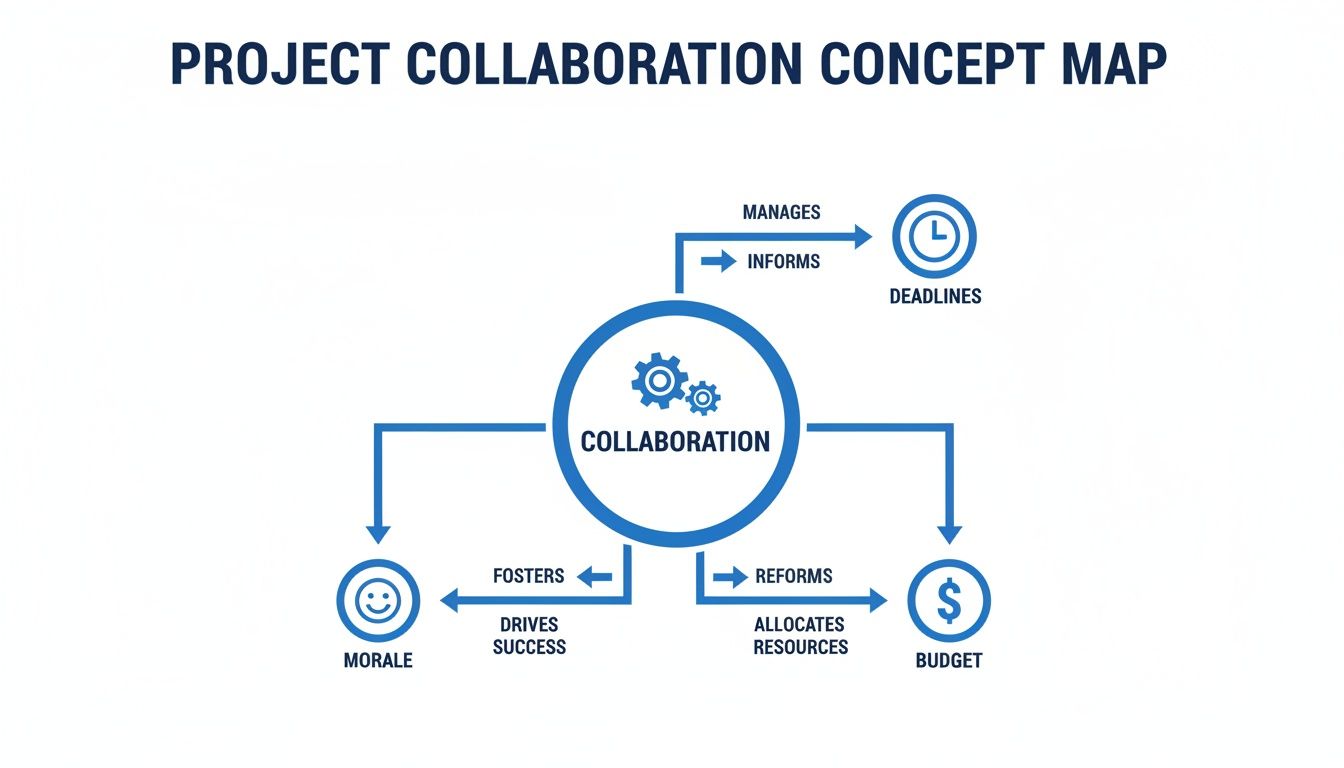
As you can see, these aren't separate challenges to be tackled one by one. They are all deeply interconnected, and effective teamwork is what keeps them all turning smoothly.
How Can You Tell if Your Collaboration is Working?
Sometimes it's hard to put a finger on whether your team's collaboration is healthy or headed for trouble. This table breaks down the common warning signs versus the clear signals of success.
| Indicator | Poor Collaboration (Warning Signs) | Strong Collaboration (Success Signals) |
|---|---|---|
| Communication | Information is hoarded in silos or lost in long email chains. Key stakeholders are often out of the loop. | Communication is open, transparent, and centralized. Everyone knows where to find the latest updates. |
| Meetings | Meetings are unproductive, feel like a waste of time, and lack clear action items or decisions. | Meetings are focused, agenda-driven, and result in clear takeaways and assigned responsibilities. |
| Problem Solving | Issues are met with finger-pointing and blame. Problems often fester until they become crises. | Problems are identified early and tackled collectively. The team focuses on solutions, not blame. |
| Team Morale | Team members seem disengaged, frustrated, or apathetic. There's a noticeable lack of energy or enthusiasm. | The team is energized, engaged, and motivated. There’s a sense of shared purpose and mutual respect. |
| Project Outcomes | Deadlines are frequently missed, the budget is constantly under pressure, and the final quality is inconsistent. | Projects are consistently delivered on time and within budget. The quality of work is high and reliable. |
Use these indicators as a quick diagnostic. If you see more signs from the "Poor Collaboration" column, it's a clear signal that it's time to invest in improving your team's collaborative practices.
The data backs this up. A staggering 35% of projects worldwide finish on time and on budget. But here’s the kicker: organizations that have mastered collaborative practices see a 28% higher success rate. That’s a massive performance gap that better teamwork can close. You can dive deeper into these project management stats and trends to see the full picture.
The ultimate goal is to create an environment where the collective intelligence of the team outweighs the sum of its individual parts. This is the essence of turning a group of employees into a high-performing project team.
Modern tools are making this easier than ever, especially those built to work inside platforms your team already uses, like Google Workspace. By bringing task management directly into the daily workflow, teams can cut down on friction and keep the engine of collaboration running smoothly, paving the way for one successful project after another.
The Three Pillars of Effective Team Collaboration
Real collaboration in project management doesn't just happen by accident. It's built on a solid foundation. Just like a sturdy house needs strong supports to stand, a high-performing team relies on a few core principles to keep from collapsing under pressure. These aren’t just nice-to-have ideals; they're the absolute essentials for getting things done right.
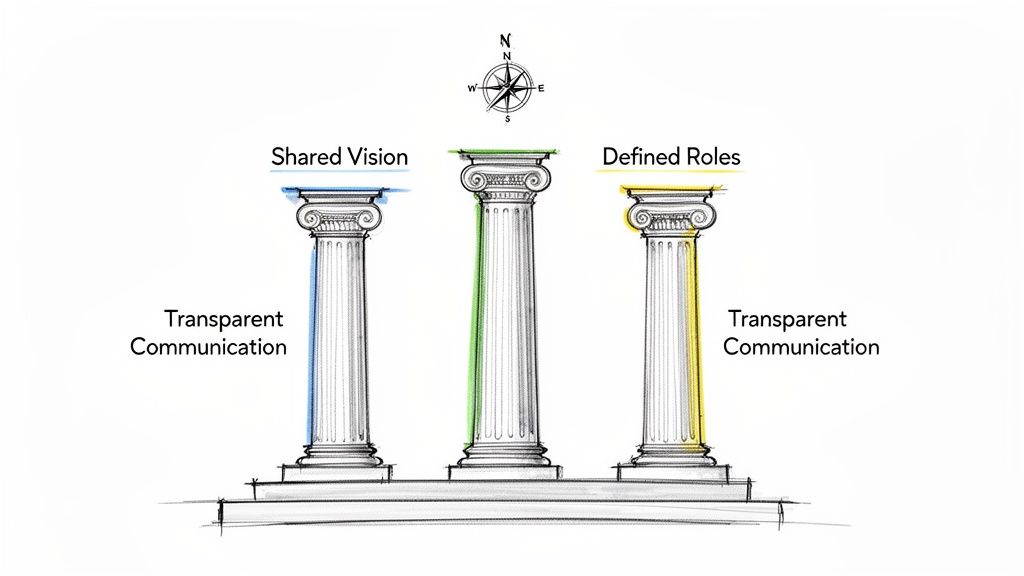
Let’s break down the three pillars that hold up any successful team. By understanding them, you can spot the weak points in your own team's foundation and start reinforcing them.
Pillar 1: A Shared Vision
The first and most important pillar is a Shared Vision. You can think of this as the team's North Star. It's the single, unifying goal that everyone is working toward, making sure every individual effort is pulling the project in the exact same direction. Without it, you get a lot of busy people working on completely different things.
For instance, imagine a marketing team launching a new product. One person might be totally focused on getting as many leads as possible, while another is obsessed with building brand prestige. Both are good goals, but if they aren't aligned under a shared vision, like "acquire 500 high-quality enterprise leads", their efforts will clash, burning through time and money.
A powerful shared vision gives your team:
Direction: A clear destination makes it way easier to prioritize tasks and make smart decisions on the fly.
Motivation: When people genuinely believe in the goal, they’re more invested and won't give up when things get tough.
Alignment: It ensures that every little task, no matter how small, adds up to the larger objective.
Pillar 2: Transparent Communication
If a shared vision is the destination, then Transparent Communication is the central nervous system that keeps every part of the team connected and in sync. It’s about the free flow of information, feedback, and ideas - both good and bad - without anyone fearing they’ll get in trouble for speaking up.
When communication breaks down, information silos pop up everywhere. A developer on one side of the project might solve a bug that another team member is still tearing their hair out over. But because that fix wasn't shared, hours of effort went down the drain. Transparent communication turns knowledge into a shared asset, not a private one.
This has become even more critical as teams embrace flexible work. The massive shift to hybrid and remote models is changing project management, with a whopping 91% of U.S. workers now preferring to work remotely at least some of the time. This trend is pushing teams toward tools that can bridge gaps across cultures and time zones.
Effective collaboration doesn't just happen; it is the result of a supportive environment where individuals feel safe to communicate openly, challenge ideas constructively, and share both successes and failures without blame.
This means setting up channels where information is easy to find, feedback is actually encouraged, and updates are regular and reliable.
Pillar 3: Defined Roles and Responsibilities
The final pillar is having Defined Roles. This is your project’s blueprint, clearly laying out who is responsible for what. It's all about bringing clarity to the team and getting rid of the confusion that leads to duplicate work or, worse, critical tasks falling through the cracks.
Think about a construction crew where nobody knows who's supposed to pour the foundation versus who's framing the walls. The result would be chaos, endless delays, and a building that's anything but stable. The same is true for any project team.
When you clearly define roles and responsibilities, you:
Establish Accountability: Everyone knows what they’re expected to deliver, which builds a culture of ownership.
Improve Efficiency: It stops multiple people from accidentally working on the same thing and makes sure every piece of the puzzle is assigned.
Reduce Conflict: A lot of team friction comes from ambiguity over who's supposed to do what. Clarity puts those arguments to rest.
When these three pillars: Shared Vision, Transparent Communication, and Defined Roles, are locked in place, they create a resilient structure that can support even the most ambitious projects. A crack in any one of them can put the entire effort at risk, which is why every project manager should make them a top priority.
Navigating Common Collaboration Roadblocks
Let's be realistic: even the most dialed-in teams run into friction. Great collaboration in project management isn't about pretending problems don't exist; it's about having a game plan to tackle them before they blow up your project. When you treat these roadblocks as an expected part of the journey, you can build a process that's resilient enough to handle them.
Anticipating the hurdles is half the battle. The most common issues aren't flashy technical meltdowns. They're the quiet, human-centric challenges that slowly drain a team's momentum and morale. Spotting them early is the key to keeping everything on track.
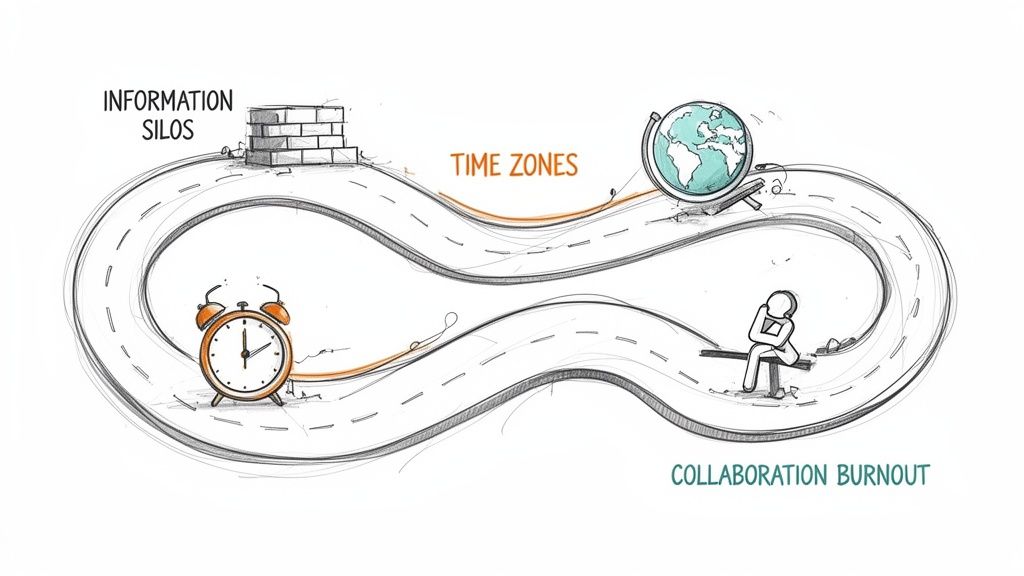
So, let's break down the three most frequent collaboration killers and talk about practical ways to shut them down.
Overcoming Information Silos
Information silos are those invisible walls that spring up between people or entire departments. This is what happens when critical knowledge gets stuck with one person or a tiny group, leaving everyone else in the dark. The outcome is always the same: duplicated work, bad decisions, and a whole lot of frustration.
This problem gets even worse on remote and hybrid teams, where you can't just swing by someone's desk for a quick chat. A developer might figure out a tricky bug, but if that solution stays buried in a private message, another developer could easily waste a whole day wrestling with the same thing.
To tear down these walls, you need a single source of truth.
Centralize Your Docs: Use a shared space like Google Docs or a team wiki for everything project-related, from meeting notes to technical guides. No more hunting through old emails.
Create Public Channels: Make dedicated channels in your team chat for specific projects. Push for questions to be asked there instead of in DMs, so the whole team benefits from the answer.
Use a Shared Task Board: A visual tool like a Kanban board makes it crystal clear what everyone is working on, what the status is, and what's next in the pipeline.
Managing Different Time Zones
Trying to coordinate work across multiple time zones can feel like a logistical nightmare. Just scheduling a meeting can become an impossible puzzle, and waiting for an answer from a colleague halfway across the world can bring progress to a dead stop. This asynchronous world demands a fundamental shift in how your team works.
The secret is to stop relying on real-time communication and start mastering asynchronous work.
Don't fight the time difference; lean into it. Structure your workflows so that one team's end-of-day handoff becomes the next team's starting point, creating a continuous, 24-hour work cycle.
For this to work, clear documentation and detailed handoff notes are non-negotiable. When teams hit a snag, for instance, having clear processes for handling common project issues is a huge part of making this "follow-the-sun" model work.
Preventing Collaboration Burnout
Here's a hard truth: more collaboration isn't always better. "Collaboration burnout" is the very real exhaustion that sets in when team members are so buried in meetings, messages, and pings that they have zero time left for actual deep work. A calendar packed with back-to-back video calls is a one-way ticket to exhaustion and tanking productivity.
Protecting your team's focus is just as vital as facilitating communication.
Set "No Meeting" Blocks: Carve out specific hours or even whole days where meetings are off-limits. This gives everyone a chance to get into a flow state and make real progress.
Define Communication Rules: Create simple guidelines for which tool to use when. For example: email for formal updates, chat for quick questions, and a project management tool for task-specific talk.
Make Meetings Matter: Every meeting invite needs a clear agenda and a goal. If it doesn't have one, empower your team to politely decline or ask for more details.
By actively taking on silos, time zones, and burnout with these kinds of structured solutions, you turn common roadblocks into opportunities to make your team's collaborative muscles even stronger.
Building Your Ideal Collaboration Tech Stack
The right technology can feel like a superpower for your team, but the wrong tools just create more noise and frustration. When it comes to collaboration in project management, success isn't about collecting the most apps; it’s about finding the right ones that work together without a hitch. The goal is to build a tech stack that feels like a natural part of your team's workflow, not another obstacle to jump over.
Think of it like setting up a custom workshop. You wouldn't just cram it full of random equipment. You’d pick a power saw, a drill press, and a sander that all serve a clear purpose and help you build something great. Your collaboration tech stack needs to be just as intentional.
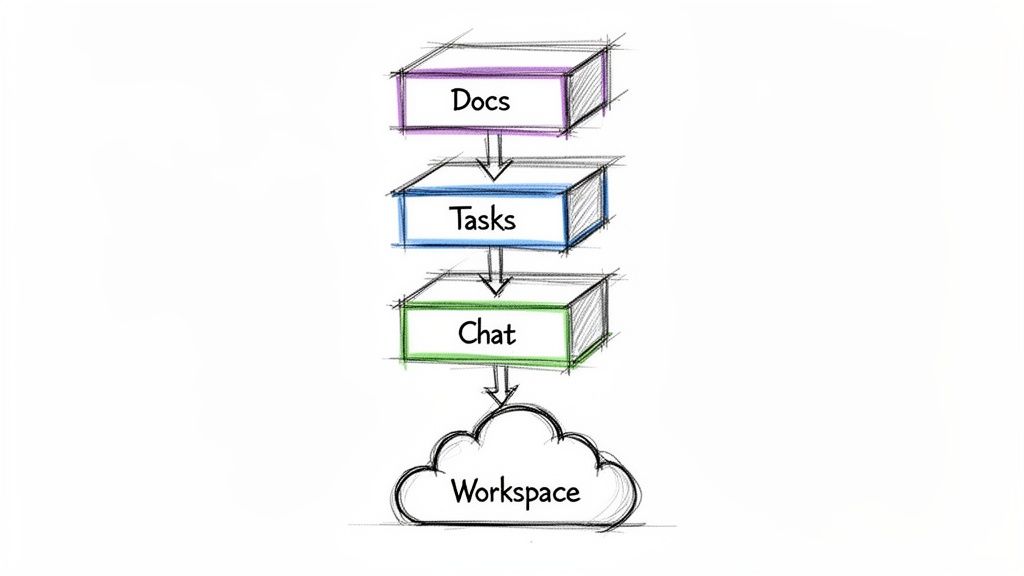
This thoughtful approach is more critical than ever. With the boom in remote and hybrid work, collaboration software has become a non-negotiable business tool. Adoption shot up from 55% in 2019 to 79% in 2021 as companies figured out how to operate in new ways.
Choosing Tools That Reduce Friction
The biggest enemy of getting things done is context switching, that mental whiplash from jumping between your email, a task list, a document, and then back to a chat app. Every single switch drains mental energy and shatters your focus. A well-designed tech stack minimizes this friction by plugging tools directly into the environment where your team already works.
For teams deep in the Google Workspace ecosystem, this means finding tools that integrate right into Gmail, Google Drive, and Google Tasks. This creates a single, unified hub where conversations, documents, and tasks all live together, keeping everyone focused and in the zone.
The best tech stack is the one your team barely notices. It should feel so integrated and intuitive that it simply fades into the background, allowing great work to come to the forefront.
When your tools are truly connected, you can build incredibly smooth workflows. Imagine a project manager assigning a task from a shared Kanban board right inside Gmail. The team member sees it, works on it, and marks it complete without ever leaving their inbox. That’s the magic of an integrated system.
Core Components of a Modern Tech Stack
While every team is a bit different, a solid collaboration stack usually has a few key ingredients.
Visual Task Management: Tools like Kanban boards give everyone a clear, at-a-glance view of who is doing what and where every task stands. This visual clarity is crucial for keeping the whole team aligned. If you're curious, check out our guide on how to share a task list in Google Tasks to get started.
Real-Time Document Collaboration: Platforms like Google Docs let multiple people co-author, edit, and comment on documents at the same time. This puts an end to the version-control nightmare of emailing files back and forth.
Centralized Communication: A dedicated chat tool with organized channels for different projects keeps conversations focused and easy to find later. This stops important details from getting buried in messy email chains. For in-person meetings, smart Audio Visual Solutions can also make a huge difference in how well people connect and share ideas.
Shared Calendars: It sounds simple, but a shared calendar is essential. It ensures everyone knows about important deadlines, meetings, and who's available, stopping scheduling headaches before they even start.
Essential Collaboration Tool Evaluation Checklist
Choosing tools that fit neatly into your existing Google Workspace can feel overwhelming. This checklist is designed to help you cut through the noise and ask the right questions, ensuring any new tool actually makes your team's life easier, not harder.
| Evaluation Criteria | Key Questions to Ask | Ideal Outcome for Google Workspace Users |
|---|---|---|
| Direct Integration | Does this tool integrate directly inside Gmail, Google Drive, or Google Calendar? Do users need to leave their primary workspace to use it? | The tool functions seamlessly within the Google interface, minimizing context switching and requiring no new tabs or applications. |
| Ease of Use | How steep is the learning curve? Can my team start using it effectively within a day or less with minimal training? | The tool is intuitive, leveraging familiar Google design patterns, making adoption quick and painless for the entire team. |
| Workflow Alignment | Does this tool solve a specific problem in our current workflow? Does it automate a manual process or fill a clear gap? | It directly addresses a known friction point, like turning emails into tasks or visualizing project progress without manual updates. |
| Centralized Data | Where is the data stored? Does it sync with Google Drive or Google Tasks, or does it create a separate information silo? | All data, tasks, and files remain within the secure Google ecosystem, ensuring a single source of truth and simplifying data management. |
| Scalability | Can this tool grow with my team? Does it support both small projects and more complex, multi-stage initiatives? | The tool is flexible enough to handle increasing project complexity and team size without becoming clunky or difficult to manage. |
| Notification Control | How does the tool handle notifications? Are they customizable to avoid creating more noise and distractions for the team? | Notifications are smart, relevant, and can be configured to fit individual preferences, keeping everyone informed but not overwhelmed. |
By carefully picking and integrating tools that cover these core functions, you create an environment where collaboration isn't just encouraged. It's the easiest way to get work done.
How to Cultivate a Collaborative Culture
Having the perfect tech stack is a great start, but tools alone don't build great teams. The most effective collaboration in project management isn't born from software. It grows from a strong company culture. It’s an environment where teamwork isn't just a buzzword on a poster but the default way of getting things done.
Think of it this way: a collaborative culture is what happens when team members feel safe enough to share half-formed ideas, ask for help without feeling incompetent, and challenge the status quo constructively. It's the soil from which trust, innovation, and genuine ownership grow. So, how do you move from just having collaboration tools to being a collaborative team? It all starts with intentional, consistent actions.
Lead by Example
People look to their leaders for cues on how to act. If you want your team to be open, transparent, and supportive, you have to walk that walk every single day. You set the tone.
When you openly admit you don't have all the answers and ask for the team's input, you’re signaling that every voice is valued. When you share both the wins and the setbacks with total honesty, you build trust. Your actions are far more powerful than any memo you could ever write.
Try this tomorrow: At your next team meeting, instead of just assigning tasks, present a challenge the project is facing. Say, "I have a few ideas, but I'm really curious to hear what you all think first." Then, just listen. Actively listen and find ways to incorporate their suggestions.
Establish Clear Rules of Engagement
Great collaboration isn’t a chaotic free-for-all. In fact, it’s the opposite. The best teamwork thrives on structure and clear expectations. Without ground rules, you end up with collaboration burnout, where everyone is overwhelmed by pings, emails, and notifications.
"Rules of engagement" are just simple, agreed-upon guidelines for how your team communicates and works together. These rules reduce friction and, most importantly, protect everyone's focus.
Define Your Channels: Decide which tool is used for what. Maybe a chat channel is for urgent questions, email is for formal stakeholder updates, and all other discussions happen in the comments of your project management tasks.
Set Response Time Expectations: Agree on what "timely" means. Knowing that a non-urgent question doesn't need an answer in five minutes empowers people to disconnect and get deep work done.
Standardize Handoffs: Create a simple checklist for passing work from one person to another. This tiny step prevents key details from falling through the cracks, especially when you're working asynchronously. For more ideas, check out our guide on how to improve team collaboration.
Foster Psychological Safety
This is the absolute bedrock of any high-performing team. Psychological safety is the shared belief that it's okay to take risks. It’s the feeling that you can speak up, offer a wild idea, or admit you made a mistake without being embarrassed or punished.
When people feel safe, they stop spending energy on self-protection and start investing it in creative problem-solving. This is where you get the honest feedback that stops projects from going off the rails and the creative sparks that lead to breakthroughs.
In a psychologically safe environment, the team's focus shifts from 'who is to blame?' to 'what can we learn from this?'. That small change in perspective makes all the difference.
To build it, leaders must frame mistakes as learning opportunities. When something goes wrong, facilitate a blameless post-mortem that focuses on improving the process, not pointing fingers.
Celebrate Team Wins
Finally, make it a habit to celebrate shared successes. While recognizing individual high-achievers has its place, putting a spotlight on collective accomplishments reinforces the value of working together. It reminds everyone that they succeed or fail as a single unit.
This doesn't have to be a big production. A simple shout-out in a team channel or at the start of a meeting can have a huge impact. By consistently highlighting how teamwork led to a positive outcome, you reinforce the very behaviors you want to see more of, solidifying your collaborative culture one win at a time.
Your Action Plan for Better Project Collaboration
Alright, we've covered a lot of ground. We've talked about why collaboration in project management is the secret sauce, what makes it work, the common traps teams fall into, and how to build a culture where it thrives. But knowing isn't the same as doing. The goal here isn't to boil the ocean and implement every single idea overnight; that's a recipe for burnout.
Instead, think of this as a continuous improvement mission. It's like starting a new fitness routine. You don’t just show up and run a marathon on day one. You start with a short jog, work on your form, and slowly build up steam. The same exact principle applies to improving how your team works together.
The biggest wins in team performance don't come from a single, massive overhaul. They come from small, consistent improvements that stack up over time, creating a powerful and lasting collaborative rhythm.
This mindset turns what feels like a huge, intimidating task into a series of small, manageable wins. When you focus on one change at a time, you give your team the breathing room to actually adapt and internalize the new habit, which makes it far more likely to stick around for the long haul.
Start Small This Week
Here's your action plan: don't try to do everything at once. Just pick one single strategy from this guide and commit to trying it with your team this week. That's it.
Need some ideas to get the ball rolling?
Clarify a Handoff Process: Map out a simple, three-step checklist for passing work from one person to the next. This alone can stop crucial details from slipping through the cracks.
Run a Better Meeting: Pick one of your recurring team meetings. This time, send a clear agenda with a specific goal 24 hours in advance. Then, make sure you end the meeting by confirming who owns what action items.
Centralize One Project: Take a single, small project and move all its communications and files into a dedicated chat channel and a shared task board. See how it feels to have everything in one place.
Once you’ve got one down, pick another. Small, steady steps are the most reliable way to build a deeply collaborative culture. For more ideas on keeping things moving in the right direction, check out our guide on how to effectively track project progress with your team.
Frequently Asked Questions
Even with the best game plan, questions about making collaboration in project management actually work are bound to pop up. Here are some straightforward answers to the things project managers and team leads ask most.
How Can We Measure the ROI of Better Collaboration?
Trying to measure the return on investment (ROI) for something as intangible as collaboration can feel like nailing jelly to a wall, but it's totally doable. The trick is to stop looking for one magic number and instead focus on the real-world results that great teamwork creates.
Keep an eye on these key performance indicators (KPIs) to see the difference:
Fewer Revision Cycles: When collaboration is firing on all cylinders, work gets done right the first time, more often. Less back-and-forth and fewer drafts mean hours and resources saved.
Faster Project Delivery: Aligned teams just move faster. Shaving even 10% off your project timelines can make a huge difference to your bottom line and keep clients happy.
Lower Team Turnover: A genuinely collaborative and positive workplace is a huge reason people stick around. Less turnover means you're not constantly spending a fortune on hiring and training new folks.
What Is the Project Manager's Role in Fostering Collaboration?
The role of the project manager has evolved. It’s no longer about being a top-down "taskmaster" but about being a supportive "facilitator." Your main job isn't just to hand out assignments; it's to build an environment where your team can do their absolute best work.
A great project manager is a barrier-remover. They're constantly on the lookout for obstacles—whether it's a resource shortage, fuzzy requirements, or team friction—and clear them out of the way so the team can keep their momentum.
Think of yourself as the architect and guardian of your team's collaborative space. That means championing open communication, protecting your team from outside noise, and making sure everyone has what they need to win together.
Can Asynchronous Collaboration Really Be Effective?
Oh, absolutely. For teams spread across different time zones, asynchronous collaboration isn't just a nice-to-have—it's a necessity. The secret is to stop trying to force an in-office, 9-to-5 rhythm on a remote setup and instead build processes that let independent work shine.
Making async work requires a smart balance. You need stellar documentation, crystal-clear handoffs between team members, and a culture built on trust. While you'll still want to hop on a call for big brainstorming sessions or tough problems, most of the day-to-day work can happen on everyone's own schedule. This respects deep work, cuts down on meeting burnout, and lets you hire the best talent, no matter where they live.
Ready to build a truly collaborative workflow without ever leaving your inbox? Tooling Studio's Kanban Tasks extension for Gmail and Google Tasks transforms how your team manages projects. Share visual boards, assign tasks, and keep everyone in sync, all within the Google Workspace you already love.
 Download our Plugin